LED and videowalls
What really spoils an LED picture? Pixel pitch
An LED wall can look stunning from afar and broken up close. The cause is rarely quality; it's the wrong pitch for the distance.
PlatPlay team · 2 min read
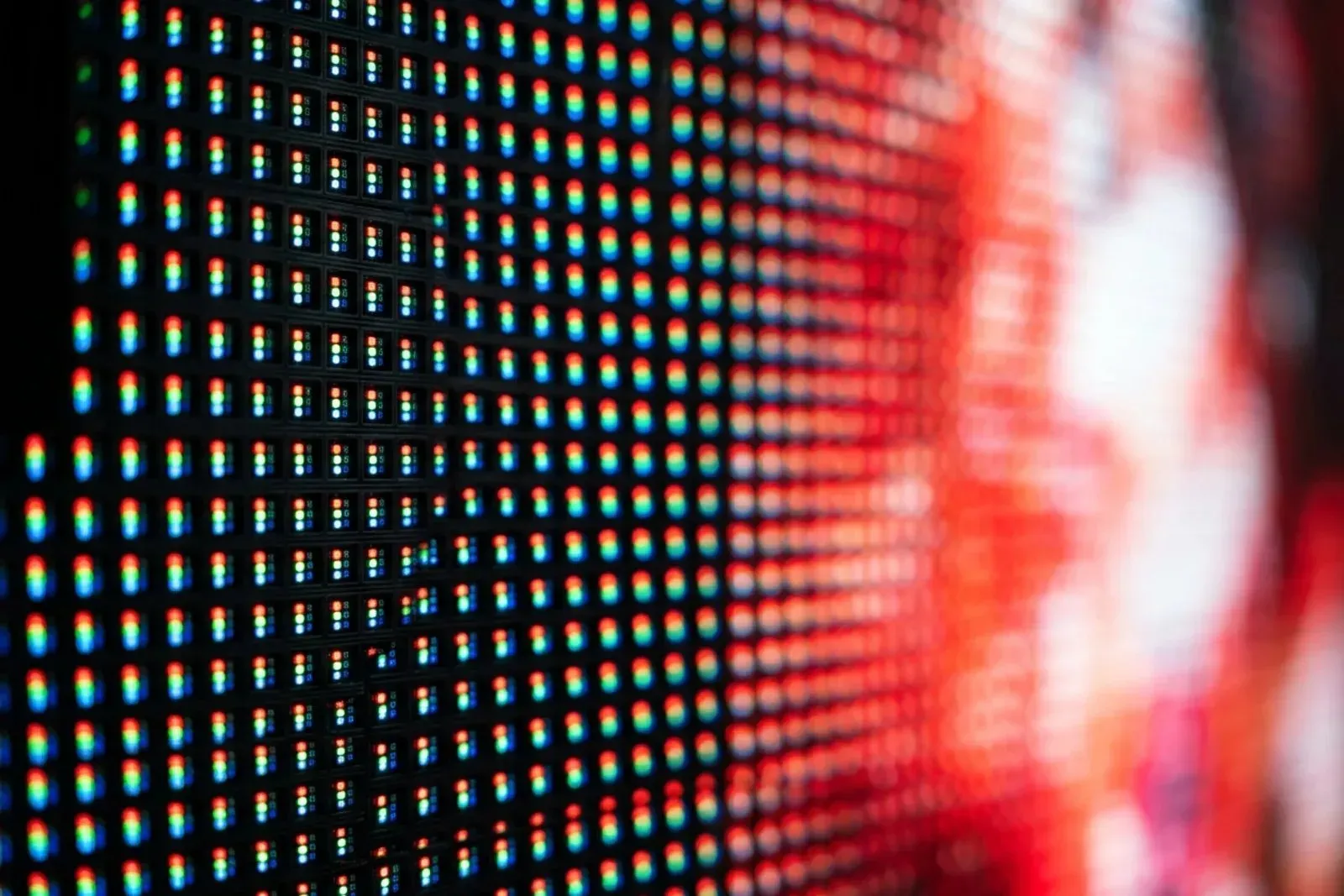
An LED screen that impresses from across the room can look pixelated a few metres closer. Usually the screen isn't poor; the pixel pitch is wrong for where it is used. Pitch matters as much as resolution, size and brightness and it affects everything from viewing distance to the budget. So the question isn't only how many square metres of screen, but how far away people will be.
What pixel pitch is
Pixel pitch is the distance between the centres of two neighbouring pixels, in millimetres. P1.5 means about 1.5 mm, P2.5 about 2.5 mm, P4 about 4 mm. The smaller the pitch, the more pixels fit on the same surface and the more detail it can show. But smaller isn't automatically better: the right pitch depends on where the screen is and from how far it is seen.
Why not always use the finest pitch?
Because density nobody can see is just cost. On a façade watched from 30 metres, a very fine pitch adds pixels the eye can't resolve. In a store where people stand 2–3 metres away, a finer pitch matters. The aim is the pitch that suits the distance, not the smallest number available.
Distance and pitch
The closer the viewer, the more likely they are to see individual pixels, so short distances need finer pitch. From far away the pixels merge into one image. A meeting-room LED wall and a stadium screen shouldn't share a pitch; using the same product for both means the needs weren't analysed.
When the pitch is wrong
Too coarse for the distance and viewers see the LED dots, which ruins text and fine detail. Far finer than needed and the screen costs more for a difference nobody can perceive from where they stand. Small type, product details and complex graphics lose legibility on a badly specified screen.
Indoor and outdoor
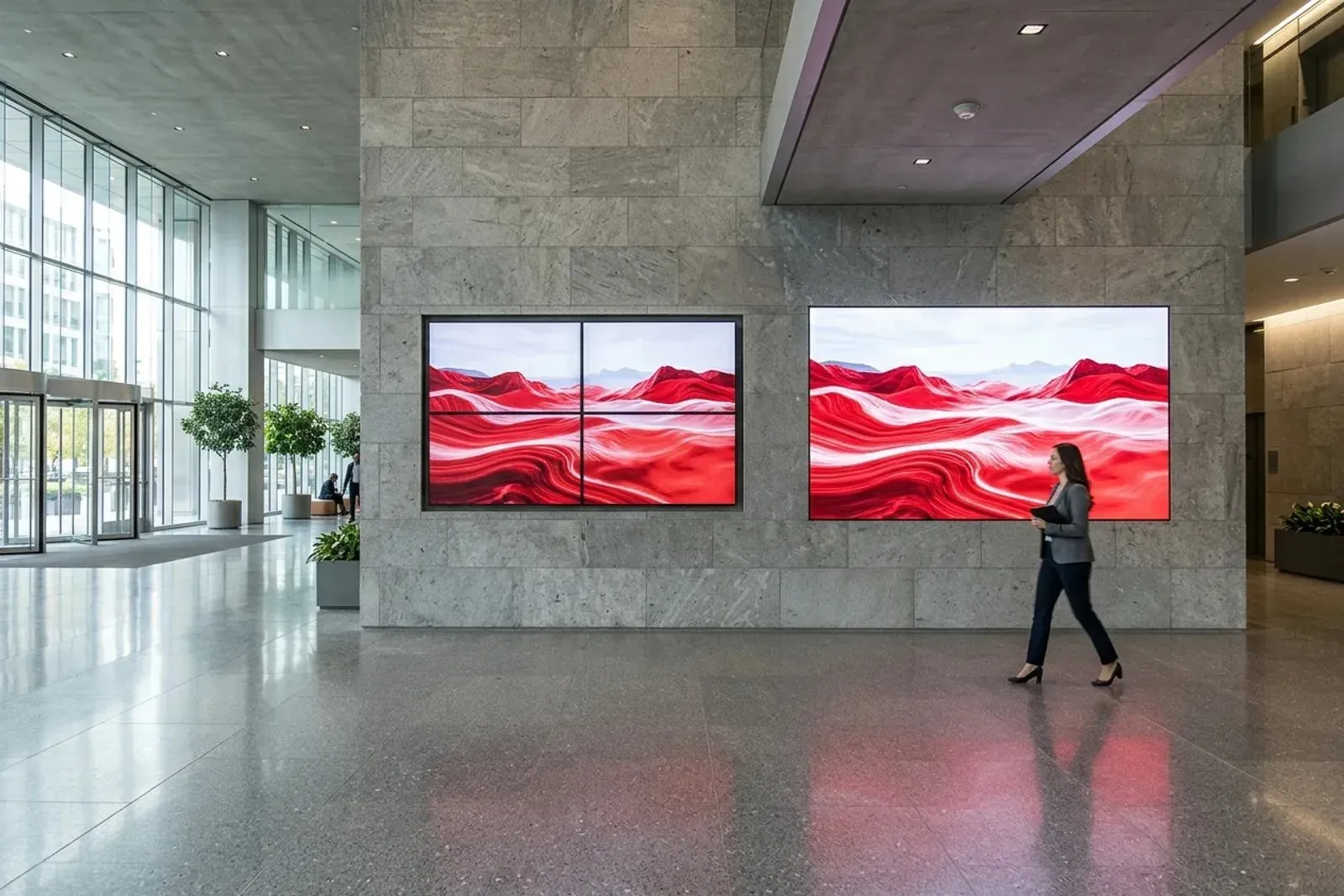
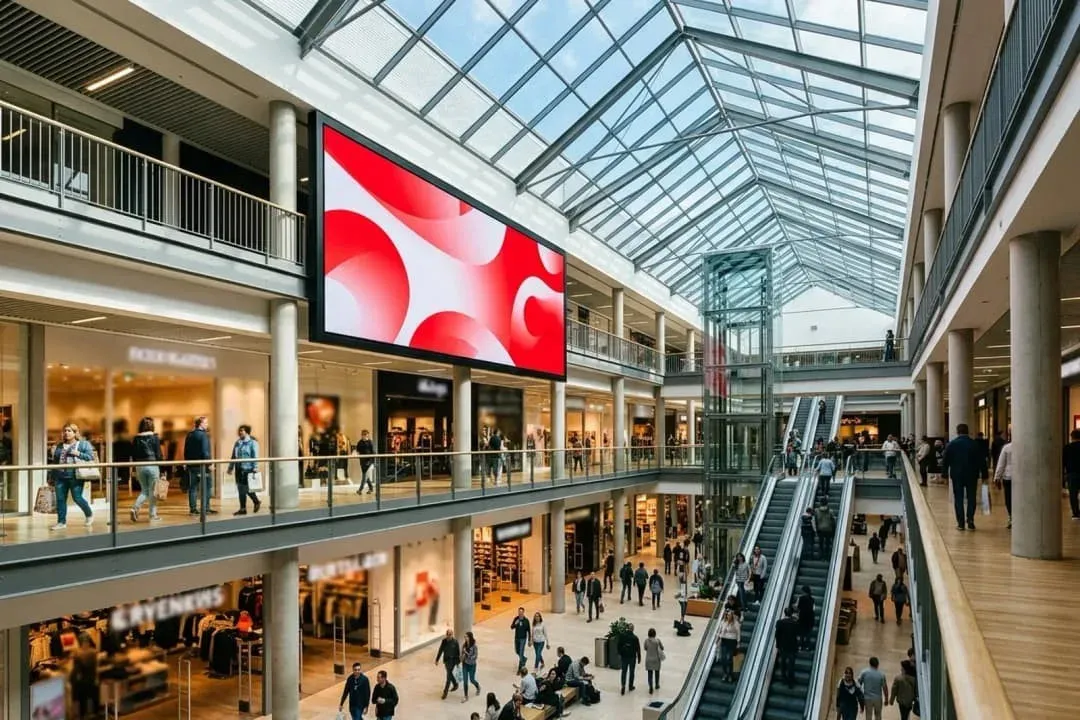
Indoors, people stand closer, so stores, showrooms, lobbies, control rooms and meeting rooms tend to use finer pitches, especially in premium retail where the screen is part of the interior. Outdoors, façades, billboards, stadiums and squares are watched from further away, so coarser pitches are often enough, while brightness in sunlight and resistance to rain and dust become just as important.
Content changes the answer
Big type and bold images read from far away; price lists in small type and detailed charts need more resolution. Plan screen and content together and design templates for the screen's real resolution from the start.
“The right pitch is a balance of picture, cost and use. Look for the right value, not the smallest one.”
Pitch isn't the whole story
LED quality, colour calibration, contrast, brightness, refresh rate, the processor and the installation all shape the picture. A fine-pitch screen with poor calibration still looks unnatural. And because a smaller pitch means more LEDs and electronics on the same surface, small pitch differences can move a large project's budget a lot. Weigh minimum and average viewing distance, size, position, indoor or outdoor use, content, ambient light and budget together.
Common questions
What is pixel pitch?
Pixel pitch is the distance between the centres of two neighbouring pixels, in millimetres. The smaller the pitch, the more pixels fit on the same surface and the more detail it can show.
Does a smaller pitch mean a better picture?
Not on its own. Density nobody can see is just cost: the right pitch depends on where the screen is and from how far it is seen.
Do outdoor screens need a fine pitch?
Usually not. Outdoor screens are watched from further away, so coarser pitches are often enough, while brightness in sunlight and resistance to rain and dust matter just as much.